
There is another Tuscany, where a stone house in a village still costs less than €100,000 — and it is not a consolation prize.
Here is what those houses really look like: where they are, what condition to expect, and what it takes to make one yours.
When people imagine buying a home in Tuscany, they picture Chianti farmhouses, cypress-lined drives and prices to match. But Tuscany is much bigger than its postcards. In the Maremma, the region's wilder southern corner, whole villages of stone houses sit between chestnut woods and the sea — and many of those houses change hands for less than the cost of a city garage.
Where these houses are
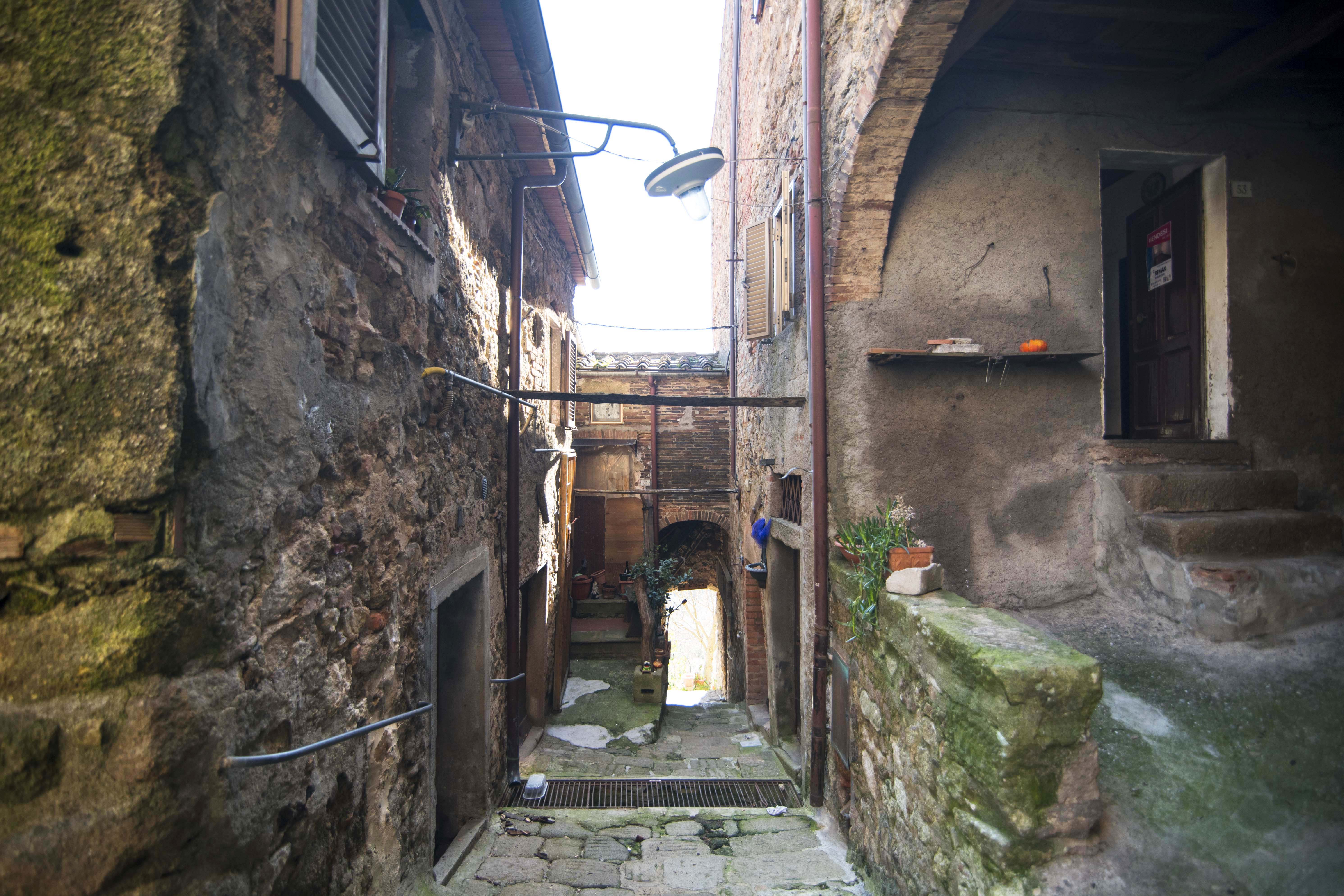
The houses we are talking about are in the hilltop villages of the Tuscan Maremma, in the province of Grosseto: places like Roccatederighi, Roccastrada and Sassofortino, each a borgo of stone houses stacked along medieval lanes, with a bar, a bakery, a church square and a view that stretches to the sea on clear days.
These are not abandoned ghost villages waiting to be rescued. People live here all year round: children walk to the school bus, the bar has its regulars, the butcher knows your name by the second visit. The sea is about forty minutes away, the thermal springs and Monte Amiata a little more, and Rome and Florence are both reachable for a day trip — though neither is next door, and we will be honest about that later.
What that money really buys
The typical house in this price range is a casa di paese — a village house on two or three floors, usually between 60 and 120 square metres, with walls of stone that keep it cool in summer and solid in every season. Many come with details that no modern build can offer: vaulted ceilings, an old fireplace, a cellar carved into the rock, sometimes a small terrace looking over the rooftops.
What you usually do not get is a garden at the door or private parking under the window. Village life happens on foot: you park nearby and walk the lane, like everyone has for centuries. For some buyers that is a deal-breaker; for others it is exactly the point.
The condition question
Let's be honest about condition, because this is where dreams meet reality. At this price level some houses are ready to live in, and some need work. Many are habitable but dated: the structure is sound, the roof is good, but the bathroom, the kitchen or the heating system belong to another era. Others have been renovated by the previous owners and are genuinely move-in ready.
What matters is not the wallpaper — it is the roof, the walls and any signs of damp. Those are the things to check before falling in love. When you visit with us, we tell you plainly which category a house belongs to, and for anything structural we always suggest bringing in a local technician before you commit. Surprises belong in presents, not in purchases.
The costs beyond the price
The asking price is not the whole picture, and a serious agency tells you this at the first meeting, not at the last. On top of the purchase price there are taxes, notary fees and agency fees. How much they amount to depends on your specific situation — which house, whether it will be your residence, how you structure the purchase — so instead of quoting generic figures, we prepare a written estimate for your specific case before you make an offer. You will know the full number in advance, in black and white.
Once you own the house, running costs in a village are modest: ordinary utilities, refuse collection, and property tax where it applies. There is no resort fee for real life.
How buying works in Italy
The Italian purchase has three steps. First, a written offer (proposta d'acquisto): nothing is binding until the owner signs it. Then, in most cases, a preliminary contract (compromesso), where a deposit is paid and the terms are fixed. Finally the deed (rogito) in front of a notary — a public official who guarantees the legality of the transfer for both sides.
Citizens of most countries can buy property in Italy without restrictions. You will need an Italian tax code (codice fiscale), which is a formality we help you obtain. We are a bilingual agency: we accompany you through every step, every document and every signature, in English.

Who this life suits
A village house in the Maremma suits people who want real life in a real place: coffee at the counter, neighbours who notice you, seasons that actually change. Summers are lively; winters are quiet — genuinely quiet — and we would rather tell you now than have you discover it in January.
It does not suit those looking for isolation in the countryside, hotel-style services, or an international enclave where everything works in English. Here, integration is the whole pleasure: learn a few words of Italian, show up at the village festival, and the Maremma will adopt you faster than you expect.
Where to start
Start by browsing our current houses at remaxverdeoro.it — every listing has photos and an honest description. When something catches your eye, write to us from the site: we answer in English and we can arrange visits, including video calls if you are still abroad.
And when you come to the Maremma, come and find us: our office is in Via Roma 1, in the village of Roccatederighi. The conversation is free, without obligation — and the coffee is on us.


